Symptoms of RSV in infants: what to watch for and when to see a doctor
By Ragini Miryala, MD, Pediatrician
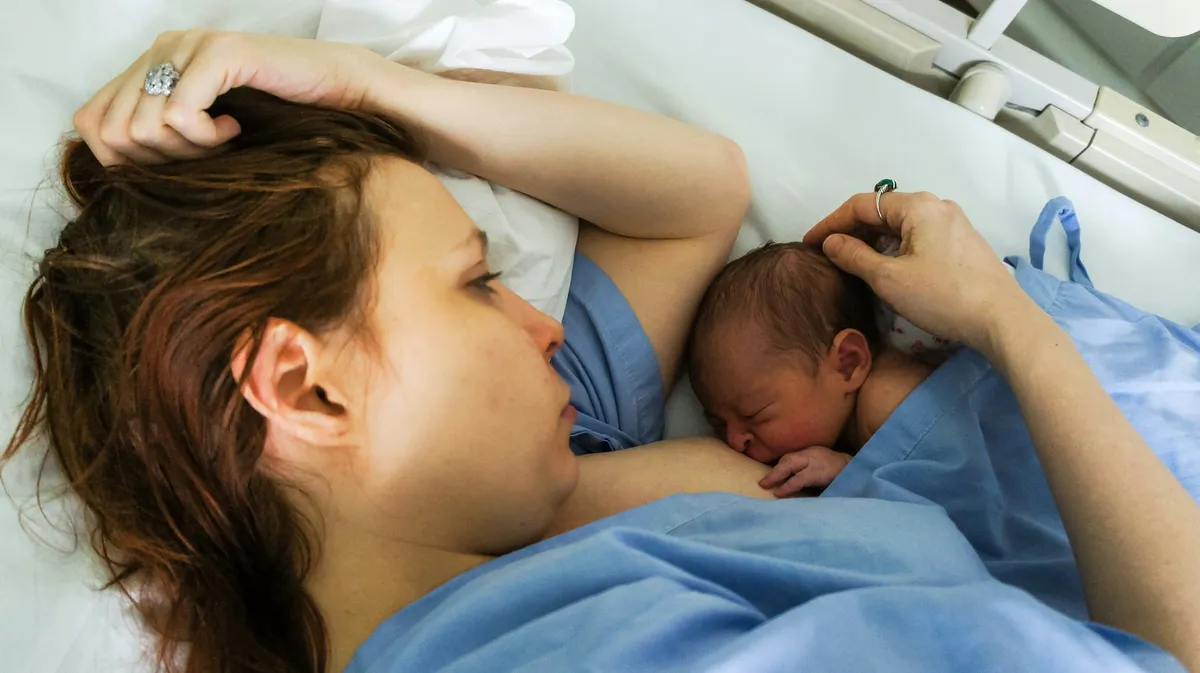
Your baby had a runny nose on Monday. By Wednesday the cough sounds wetter, she's taking less of her bottle, and you notice her belly pulling in with each breath. You start searching the symptoms of RSV in infants at midnight, phone in one hand, baby in the other.
Medical Disclaimer: This article is for education only and is not a substitute for a visit with your child's doctor. If your baby is struggling to breathe, has pauses in breathing, or looks blue or gray around the lips, call 911 or go to the nearest ER.
I've cared for babies in the Clear Lake area for more than 20 years, and every fall the same worry walks through our door: is this just a cold, or is it RSV? Most of the time, RSV in babies stays mild. But it's also the reason many infants end up in the hospital each winter, so it pays to know what to watch for. Let's start with the question you came for.
What are the symptoms of RSV in infants? The short version
It starts like a cold: runny nose, stuffy nose, sneezing, and a cough. Symptoms usually show up 4 to 6 days after your baby catches the virus.
It can get worse before it gets better: RSV is usually at its worst on days 3 to 5 of the illness, when the cough may turn wheezy and breathing can speed up.
Many babies don't run a fever. The youngest babies may only seem fussy, sleepy, or less interested in feeding.
Watch the breathing, the feeding, and the wet diapers. Those three tell you more than the thermometer.
RSV stands for respiratory syncytial virus. It's a common virus that infects the nose, throat, and lungs. Almost all children catch RSV at least once before age 2. In older kids and adults it usually feels like a cold. In babies, especially the youngest ones, it can settle into the lungs. Before RSV immunizations were available, the CDC estimated that 58,000 to 80,000 children younger than 5 were hospitalized with RSV each year in the U.S.
How RSV usually starts in babies
RSV symptoms usually show up in stages, not all at once. A typical course looks like this:
Days 1 and 2: runny nose, congestion, sneezing, and eating or drinking a little less. Some babies run a low fever.
Days 2 to 3: the cough builds. In some babies it starts to sound wet or wheezy, and breathing gets a little faster.
Days 3 to 5: usually the hardest stretch. This is when to watch breathing most closely.
After day 5: most babies slowly improve. Symptoms usually last about 7 to 14 days, and the cough can hang on for up to 3 weeks.
Signs that RSV is moving into the chest
In some babies, RSV travels from the nose down into the small airways of the lungs. Doctors call this bronchiolitis. The small airways swell and fill with mucus, which makes breathing harder work. Watch for:
Fast breathing, faster than your baby's usual rhythm while calm or asleep
Wheezing, a whistling sound when your baby breathes out
Retractions: the skin pulling in between the ribs, under the ribcage, or at the base of the neck with each breath
Nasal flaring: the nostrils spreading wide with each breath
Grunting at the end of each breath
Head bobbing with each breath in young babies
Feeding trouble: stopping often to breathe, or taking much less than usual
A quick way to check: lift your baby's shirt in good light while they're calm and watch their chest and belly for a full minute. If you see the skin sucking in between the ribs, or you count breathing that seems far faster than normal, call us or come in.
Subtle RSV signs in very young babies
In babies younger than 6 months, RSV doesn't always look like a cold. Sometimes the only signs are:
Irritability or fussiness that's out of character
Less activity: sleepier than usual, less interested in play or faces
Feeding less, or tiring out halfway through a bottle or nursing
Pauses in breathing (called apnea) that last more than 10 seconds
And many infants with RSV never run a fever. A normal temperature doesn't rule RSV out, so trust what you see.
Is it RSV or a cold?
Early on, you often can't tell by looking. RSV and the common cold both start with a runny nose and cough. The difference shows up over the next few days.
Sign | Common cold | RSV |
|---|---|---|
Runny nose, sneezing | Yes | Yes, often first |
Cough | Mild | Often gets worse over 3 to 5 days, may become wet or wheezy |
Breathing | Normal, maybe noisy from congestion | Can become fast or labored, with wheezing or retractions |
Feeding | Usually normal | Babies may eat much less because they can't breathe and suck at the same time |
Who gets sickest | Rarely serious | Babies under 6 months and premature babies |
Flu and COVID-19 can look similar too. At your visit, we check how your baby is breathing and test for flu or COVID when the result would change care.
Which babies are at higher risk?
Any baby can get very sick with RSV, including healthy, full-term babies. The CDC says the risk of severe illness is highest for:
Young infants. The younger the baby, the higher the risk. Two to three out of every 100 infants under 3 months are hospitalized with RSV each year.
Babies born premature
Babies and children with chronic lung disease or congenital heart disease
Children with a weakened immune system
Children with neuromuscular conditions that make it hard to swallow or clear mucus, or severe cystic fibrosis
If your baby is in one of these groups, bring them in sooner rather than later.
When to seek care right away
Call 911 or go to the nearest ER if your baby:
Has pauses in breathing, or you have to stimulate them to breathe
Has blue or gray color around the lips, tongue, or nails
Is struggling hard to breathe: deep retractions, grunting, or head bobbing
Is very hard to wake or limp
Come in the same day if your baby:
Is breathing fast or wheezing, even if they seem otherwise okay
Has fewer wet diapers than usual, or none in 8 hours
Is feeding much less than normal
Is under 3 months with a fever of 100.4°F or higher
Has a fever lasting more than 2 to 3 days, or symptoms that get worse instead of better
What to expect at your visit
1. Checking breathing and hydration
We start with your baby's temperature, heart rate, breathing rate, and oxygen level, measured with a small painless sensor wrapped around a toe or finger. We listen to the lungs, watch how hard your baby is working to breathe, and ask about feeding and wet diapers. These numbers tell us more about how sick your baby is than any test result.
2. Testing, when it helps
Many parents expect an RSV swab at every visit. In most babies, it isn't needed. RSV is usually diagnosed from the symptoms and the exam, and since antibiotics and other medicines don't treat it, a positive test rarely changes what you do at home. At PediSTAT we don't run a rapid RSV test. We do offer rapid flu and COVID tests when the result would change treatment, and an onsite chest X-ray when we're worried about pneumonia. If your baby needs hospital care, the hospital can run lab tests for RSV there.
3. Your care plan
We go over the results with you in the room. Most babies with RSV can be cared for at home, and we'll walk you through exactly how: suctioning, feeding, fever care, and the signs that mean come back. If your baby needs more help than we can give in the clinic, such as oxygen, we'll arrange a hospital transfer and call ahead. Our RSV care visits are built around exactly these questions.
Frequently asked questions
Is RSV in infants contagious?
Yes. RSV spreads through coughs and sneezes, through hands, and through surfaces like doorknobs and crib rails, where it can live for hours. People with RSV are usually contagious for 3 to 8 days, and can spread it a day or two before they feel sick. Some young babies can keep spreading the virus for 4 weeks or longer, even after they seem better. Wash hands often, clean shared surfaces, and keep sick siblings from kissing the baby's face.
Does my baby need an RSV test?
Often, no. RSV is usually diagnosed from your baby's symptoms and exam, and a positive test doesn't change home care, because there's no medicine that cures it. What matters most is how your baby is breathing, eating, and making wet diapers. Hospitals often run lab tests for RSV on babies who are admitted.
Can RSV go away on its own?
Yes. RSV is a virus, so antibiotics don't treat it, and most babies get better on their own in about 1 to 2 weeks with good home care. Some babies need help with breathing or fluids, which is why watching for the warning signs matters. Our guide to treatment for RSV in infants covers what helps at home.
Can my baby still get RSV if I got the RSV vaccine in pregnancy?
Yes, but it's much less likely to be serious. The CDC recommends one of two ways to protect babies in their first RSV season: an RSV vaccine for the mother during weeks 32 to 36 of pregnancy, or an RSV antibody shot for babies younger than 8 months whose mother didn't get the vaccine. Most babies don't need both. Protection from either one lowers the risk of severe RSV, but a baby can still catch a milder case. Recommendations have been changing, so ask your pediatrician which option fits your baby.
We're right here in Webster when you need us
RSV season is hard on babies and on the parents watching every breath. You don't have to guess. A quick check of breathing and oxygen gives you a clear answer and a plan for the nights ahead.
At PediSTAT Urgent Care, our pediatric urgent care team sees babies and kids 7 days a week, close to families in Clear Lake, League City, Nassau Bay, Seabrook, Friendswood, Dickinson, and La Porte.
👉 Book an RSV care visit today. PediSTAT Urgent Care, 205 E. Medical Center Blvd., Webster, TX 77598. Hours: Mon to Fri 9 AM to 7 PM, Sat 10 AM to 5 PM, Sun 10 AM to 1 PM.
Medically reviewed by Ragini Miryala, MD. Last reviewed: November 2026.
This content is for educational purposes only and does not constitute formal medical advice, diagnosis, or treatment. Always consult a qualified healthcare provider regarding any medical condition.