

How Long Does a Sprained Ankle Take to Heal? Treatment, Home Care & Safe Return to Sports for Kids
By Ragini Miryala, MD, Pediatrician
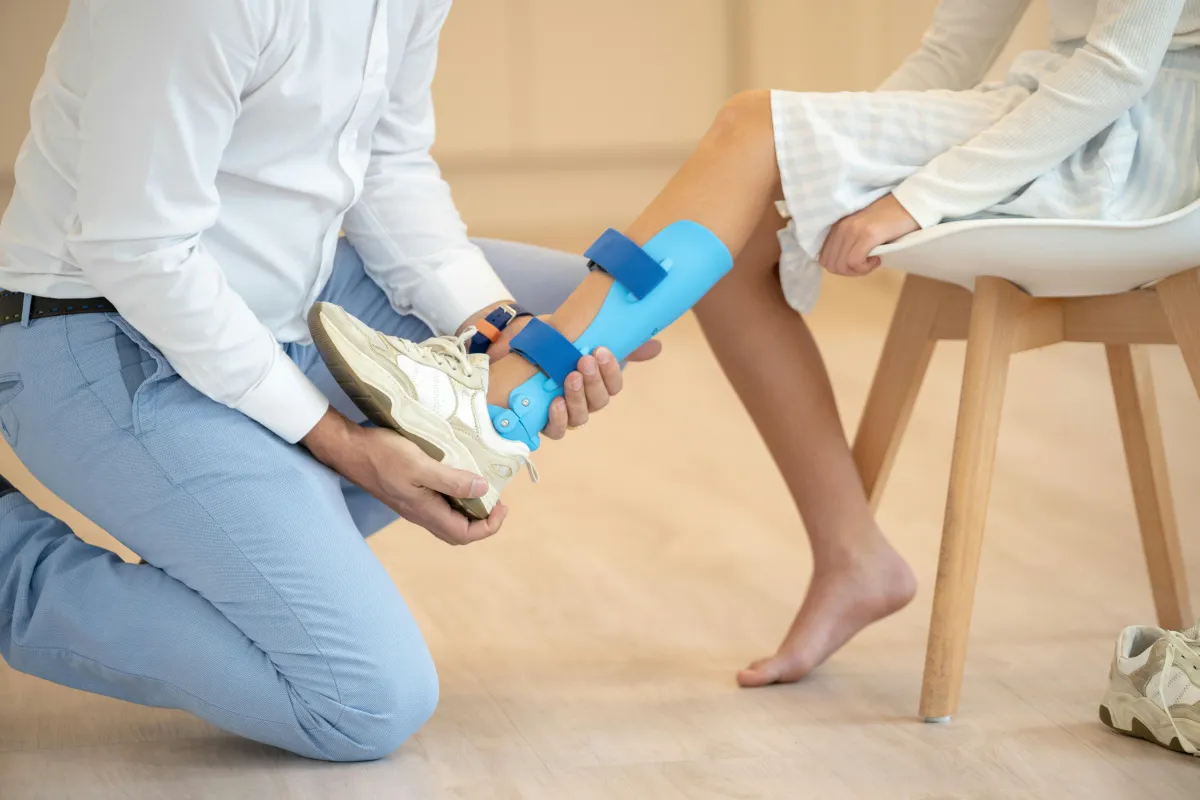
Your child has been diagnosed with a sprain or strain. The x-ray is clear, the wrap is on, and now the questions start. How long does a sprained ankle take to heal? When can they walk normally? And the big one from every young athlete: when can I play again?
Medical Disclaimer:
This content is for educational purposes only and does not constitute formal medical advice, diagnosis, or treatment. Always consult a qualified healthcare provider regarding any medical condition.
Here's the reassuring part. Most minor sprains and strains heal completely with good home care and a smart, gradual return to activity. Mild sprains often feel much better within one to two weeks.
The key word is gradual. Coming back too soon is one of the most common reasons kids re-injure the same ankle. This guide walks through what healing looks like, what actually helps at home, and how to know your child is truly ready for the field, court, or playground. It's written for moms right here in Webster and the Clear Lake area, where sports seasons, summer heat, and backyard trampolines keep kids moving year-round.
Key Takeaways
Treatment matches the injury. Most sprains and strains need rest, ice, compression, elevation, and support like a wrap or brace. Mild sprains usually heal in 1 to 2 weeks, moderate sprains in 2 to 4 weeks, and severe sprains in 6 to 8 weeks or longer.
Ice early, and do it right. Apply a wrapped ice pack for 15 to 20 minutes every 2 to 3 hours during the first 2 to 3 days, and keep the injured area raised above the heart.
Don't rush the return. Kids should be pain-free with full motion and strength, and able to run, hop, and cut, before going back to sports. Finishing rehab exercises lowers the risk of spraining the same ankle again.
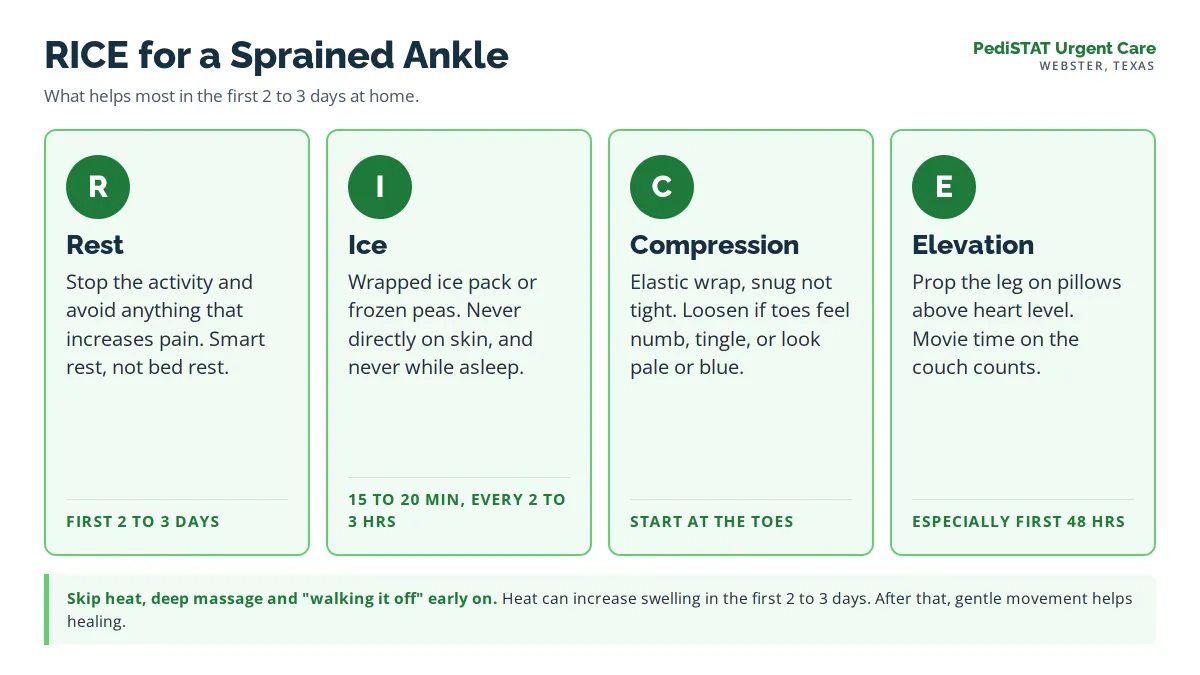
The RICE basics for the first 2 to 3 days at home.
Medical Treatment Options and Prescriptions
Most sprains and strains don't need prescription medicine or surgery. Treatment focuses on calming the injury, protecting it while it heals, and then rebuilding strength and balance.
Sprain Healing Stages
Understanding the sprain healing stages helps you see why each step matters:
Inflammation (about the first 3 days): The body sends blood and healing cells to the injured area. This causes swelling, warmth, and pain. The goal now is to protect the area and control swelling.
Repair (days to several weeks): The body lays down new tissue to patch the ligament or muscle. This new tissue is weak at first. Gentle movement helps it line up the right way.
Remodeling (weeks to months): The new tissue gets stronger and more organized. Strength, balance, and sport-specific training happen here. Tissue can still be weaker than normal even after pain is gone, which is why rehab matters.
How Long Does a Sprained Ankle Take to Heal?
Healing time depends on the grade of the sprain. Based on guidance from the American Academy of Family Physicians (AAFP):
Sprain Grade | What It Means | Typical Recovery |
|---|---|---|
Grade 1 (mild) | Ligament stretched, joint stable, can usually walk | About 1 to 2 weeks |
Grade 2 (moderate) | Ligament partly torn, walking hurts, joint may feel loose | About 2 to 4 weeks |
Grade 3 (severe) | Ligament fully torn, joint unstable | About 6 to 8 weeks, sometimes longer |
High ankle sprain | Injury to ligaments above the ankle joint | About 8 to 12 weeks |
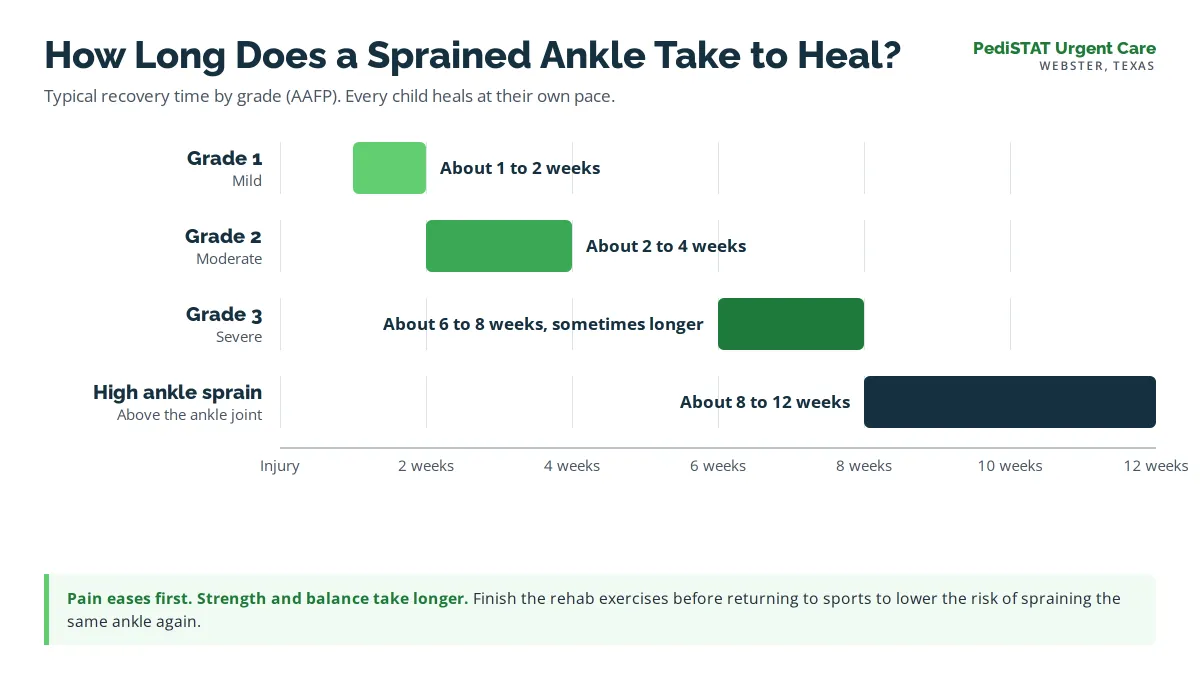
Typical recovery time by sprain grade. Every child heals at their own pace.
Muscle strains follow a similar pattern. Mild strains often improve in a week or two, while larger tears take longer. Every child heals at their own pace, so use these as guides, not deadlines.
Braces, Wraps, Splints, and Crutches
For most ankle sprains, the AAFP notes that early weight-bearing with external support helps restore function and shortens recovery. That means your child may walk as pain allows while wearing support, rather than staying completely off the foot.
Elastic wrap: Helps control swelling in the first few days.
Lace-up or stirrup brace: Supports the ankle while your child starts walking again.
Splint or walking boot: Used for more severe sprains or possible growth plate injuries.
Crutches: Helpful if walking causes a heavy limp. Most kids move to partial weight as pain improves.
If your child is in a splint, boot, or wrap, get urgent care for pain that keeps getting worse, pain that seems far out of proportion to the injury, or pain when you gently move their toes or fingers. The support may be too tight, or pressure may be building under it.
Pain Medicine
Over-the-counter medicine usually controls pain well:
Acetaminophen (Tylenol) is a good first choice for pain.
Ibuprofen (Motrin, Advil) also helps with pain and swelling and is safe for kids 6 months and older. The AAFP notes that anti-inflammatory medicines like ibuprofen may slow the normal healing process, so acetaminophen is often the first choice early on. Ask your provider which is best for your child.
Dose by weight, not age, using the measuring tool that comes with the medicine.
Never give aspirin to children or teens because of the risk of Reye syndrome.
Watch for hidden acetaminophen in cold and flu combination products, and never go over the daily limit on the label.
Skip ibuprofen if your child is vomiting or dehydrated, and check with your provider first.
Check in with your provider if your child still needs pain medicine after about one week.
Physical Therapy and Specialist Care
Many kids recover with simple home exercises. Your provider may recommend physical therapy for moderate or severe sprains, repeat sprains, or athletes who need sport-specific training. A referral to a pediatric orthopedic or sports medicine specialist makes sense for fractures, complete tears, joints that stay unstable, or injuries that aren't improving.
Not sure how bad the sprain is? We can check it today, with x-ray on site if needed.
or call (832) 215-8884
At-Home Comfort Remedies and Symptom Relief
The best sprained ankle home remedies are simple, and they work for strains too. Most follow the RICE method for sprains: Rest, Ice, Compression, and Elevation.
Rest (Smart Rest, Not Bed Rest): Stop the activity that caused the injury and avoid anything that increases pain for the first 2 to 3 days. After that, gentle movement is encouraged. Complete immobility can slow recovery.
Ice: Place a bag of ice or frozen peas wrapped in a thin towel on the area for 15 to 20 minutes at a time, every 2 to 3 hours while awake, for the first 2 to 3 days. Never put ice directly on the skin, and don't let a child fall asleep with ice on.
Compression: Wrap an elastic bandage snugly but not tightly, starting at the toes or fingers and working upward. Loosen it if your child's toes or fingers feel numb, tingle, turn cold, or look pale or blue.
Elevation: Prop the injured arm or leg on pillows so it sits above the level of the heart, especially during the first 48 hours. Movie time on the couch counts.
Hydration & Nutrition: Healing tissue needs fuel. Offer water throughout the day, especially in Texas heat, along with protein, fruits, vegetables, and calcium-rich foods to support recovery.
Over-the-Counter Relief: Use acetaminophen or ibuprofen as described above, dosed by weight. A dose before bedtime can help your child sleep through the night.
Gentle Movement: Once the worst pain eases, usually after a couple of days, try simple range-of-motion exercises like tracing the alphabet with the big toe or gentle ankle pumps. Stop if pain spikes.
School Adjustments: Ask about an elevator pass, extra time between classes, a rolling backpack, and a PE note while your child heals.
What to Skip: Avoid heat in the first 2 to 3 days, since it can increase swelling. Skip deep massage early on. And don't let your child "walk it off" or play through pain.
Key Clinical Takeaway:
In a randomized trial of 522 athletes ages 12 to 70, those assigned to an 8-week home balance training program after an ankle sprain had a 22% re-sprain rate over the next year, compared with 33% with usual care alone (Hupperets et al., BMJ 2009). Doing the rehab work, not just waiting for the pain to stop, lowers the risk of the next sprain.
Preventing Re-Injury and Managing Safe Recovery
Sprains and strains aren't contagious, so there's nothing to "spread" at home. The real risk is re-injury. A previous sprain is one of the biggest risk factors for spraining the same ankle again.
Can You Walk on a Sprained Ankle?
Often, yes. Can you walk on a sprained ankle? With a mild sprain, most kids can walk, and early walking with a brace or wrap actually helps healing. Let pain be the guide. A mild limp that improves each day is expected. If your child can't take four steps, has a heavy limp that isn't improving, or feels the ankle give way, stop and get it checked.
Return to Sports After Ankle Sprain: Your Checklist
Fall sports season in the Clear Lake area moves fast, and kids want back in. Before return to sports after ankle sprain injuries, your child should be able to check every box:
No pain or swelling during normal daily activities
Full range of motion compared with the other ankle
Strength that matches the healthy side
Walking, jogging, and running without a limp
Hopping on the injured leg 10 times without pain
Side-to-side shuffles, figure-8 runs, and quick cuts without pain or wobbling
Clearance from your provider if the sprain was moderate or severe
Build back up over several practices rather than jumping straight into a full game. The AAFP also notes that wearing a brace or tape for 12 months during high-risk sports can lower the risk of re-injury. Ask your provider whether your child's sport counts.
Preventing the Next Sprain or Strain
Keep up the balance work. Single-leg stands, wobble board drills, and hopping games strengthen the small muscles that protect the ankle.
Warm up every time. Five to ten minutes of light jogging and dynamic stretches before practice prepares muscles and tendons.
Wear the right shoes. Replace worn-out sneakers and use sport-appropriate cleats that fit well.
Build in rest days. The American Academy of Pediatrics (AAP) recommends one to two days off from organized sports each week to help prevent overuse injuries.
Stay hydrated. Heat and fatigue make kids more prone to injury, especially during hot Texas afternoons.
Be careful with trampolines. The AAP discourages recreational trampoline use at home because of the high rate of injuries, including sprains and fractures.
Healing slower than expected? Walk in or book a recheck and get a clear plan for school and sports.
or call (832) 215-8884
Frequently Asked Questions
How long does recovery typically take once treatment begins?
Most mild sprains feel much better in 1 to 2 weeks. Moderate sprains take about 2 to 4 weeks, and severe sprains can take 6 to 8 weeks or longer. Pain and swelling usually ease first, while strength and balance take longer to return. If your child isn't improving after 5 to 7 days, or things get worse, schedule a recheck.
When is it safe to return to school, work, or daily activities?
Most kids can go back to school the next day with support, like a brace or crutches, and a note to skip PE. Daily activities like walking to class are fine as long as pain stays mild. Sports and running games should wait until your child passes the return-to-sports checklist above and, for moderate or severe sprains, gets clearance from a provider.
What steps can our family take to prevent sprains and strains?
Make prevention part of your routine. Encourage warm-ups before every game, keep shoes and cleats in good shape, and schedule rest days during busy seasons. Keep walkways and play areas clear of toys and clutter. For kids who have sprained an ankle before, keep up the balance exercises and ask your provider about wearing a brace during sports.
Should I use ice or heat on a sprain?
Use ice for the first 2 to 3 days to help with pain and swelling. Heat can increase swelling early on, so save it for later. Once swelling has gone down, some kids find a warm towel helps with stiffness before gentle exercises.
Take Charge of Your Health and Recovery
Sprains and strains are part of growing up active, and most kids bounce back completely. The difference between a quick recovery and a nagging, repeat injury often comes down to three things: an accurate diagnosis, good home care, and a patient return to play.
If you're not sure how serious your child's injury is, don't guess. A quick exam, and an x-ray when needed, tells you whether it's a simple sprain or something that needs more support. You'll also leave with a clear plan for pain relief, school, and sports.
At PediSTAT Urgent Care in Webster, our pediatric providers treat sprains and strains every week. With x-ray on site, we can check for fractures and growth plate injuries in one visit. We're right on Medical Center Blvd., close to families in Clear Lake, League City, Nassau Bay, Seabrook, and Friendswood, and we're open seven days a week.
Consult with Our Medical Team Today to explore customized treatment pathways for your child's sprain or strain and help your family recover quickly.
PediSTAT Urgent Care
205 E Medical Center Blvd, Webster, TX 77598
Hours
Monday to Friday, 9:00 AM to 8:00 PM
Saturday and Sunday, 10:00 AM to 6:00 PM
Or call (832) 215-8884
Book your visit online
Learn more about our pediatric urgent care services, or come see us for a same-day walk-in visit.
Medically reviewed by Ragini Miryala, MD. Last reviewed: September 23, 2026.
Medical References
American Academy of Family Physicians. Recovering From an Ankle Sprain (patient information). Am Fam Physician. 2025.
American Academy of Orthopaedic Surgeons (OrthoInfo). Sprains, Strains, and Other Soft-Tissue Injuries.
Nemours KidsHealth. Strains and Sprains: First Aid.
Hupperets MD, et al. Effect of unsupervised home based proprioceptive training on recurrences of ankle sprain: randomised controlled trial. BMJ. 2009;339:b2684.
American Academy of Pediatrics. Trampoline Safety in Childhood and Adolescence. Pediatrics. 2012;130(4):774-779.
Cleveland Clinic. Sprained Ankle.